How AI Workflow Systems Are Replacing Traditional SaaS Stacks in 2026
Introduction
For years, businesses have relied on a growing collection of SaaS tools to manage daily operations. Marketing teams use one platform for email campaigns, another for analytics, and several more for project management and customer support.
While SaaS software remains essential, a new trend is emerging in 2026. Companies are increasingly adopting AI workflow systems that connect multiple tools into a unified automation layer.
Instead of employees manually moving information between applications, AI-powered workflows can perform repetitive tasks automatically, saving both time and operational costs.
What Is an AI Workflow System?
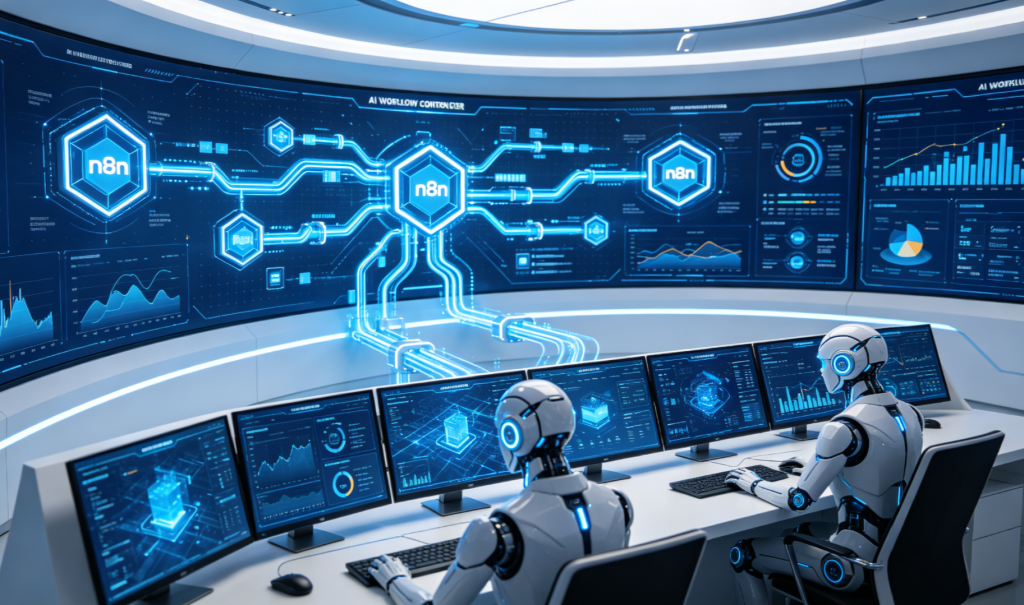
An AI workflow system is a combination of automation software, AI models, and integrations that work together to complete business processes.
Unlike traditional software, which usually performs a single function, workflow systems coordinate actions across multiple platforms.
For example, a modern workflow can:
- Collect leads from a website
- Qualify prospects using AI
- Generate personalized email responses
- Update CRM records automatically
- Notify team members when action is required
All of these tasks can happen without manual intervention.
Why Businesses Are Moving Beyond Traditional SaaS Stacks
The average company now uses dozens of software subscriptions.
As software adoption grows, businesses face several challenges:
Rising Costs
Monthly subscriptions accumulate quickly. Multiple SaaS tools often perform overlapping functions, creating unnecessary expenses.
Data Fragmentation
Information becomes scattered across different platforms, making it difficult to maintain a consistent workflow.
Manual Processes
Employees frequently copy information from one application to another, wasting valuable time.
AI workflow systems address these challenges by creating a centralized automation layer between tools.
The Role of AI Agents
One of the most important developments in 2026 is the rise of AI agents.
AI agents can:
- Analyze incoming information
- Make simple decisions
- Trigger automated actions
- Communicate with software systems
Rather than following rigid automation rules, AI agents introduce adaptive decision-making into workflows.
This allows businesses to automate increasingly complex processes.
Popular AI Workflow Platforms
Several platforms are gaining popularity among businesses and independent creators:
n8n
An open workflow automation platform that allows users to connect hundreds of applications while maintaining greater control over their data.
AI Agent Frameworks
New AI agent systems enable businesses to build automated assistants capable of handling customer interactions and operational tasks.
Workflow-Orchestration Platforms
These platforms act as central coordination hubs for multiple AI models and SaaS applications.
Benefits for Content Creators and Affiliate Marketers
AI workflow systems are particularly valuable for content-based businesses.
A typical workflow can:
- Generate article outlines
- Create social media variations
- Schedule content distribution
- Track performance metrics
- Organize reporting automatically
For affiliate marketers, this reduces repetitive work and allows more time to focus on strategy and content quality.
Future Outlook
The transition from isolated software tools to connected workflow ecosystems is likely to accelerate over the next several years.
Businesses that adopt AI workflow systems early may gain advantages in efficiency, scalability, and operational flexibility.
Rather than replacing software entirely, AI workflows serve as an intelligent coordination layer that helps organizations get more value from the tools they already use.
Conclusion
AI workflow systems are becoming a core part of modern business infrastructure. By connecting software tools, automating repetitive tasks, and enabling AI-powered decision-making, these systems are reshaping how organizations operate in 2026.
As AI technology continues to evolve, workflow automation will likely become one of the most important productivity trends for businesses of all sizes.